
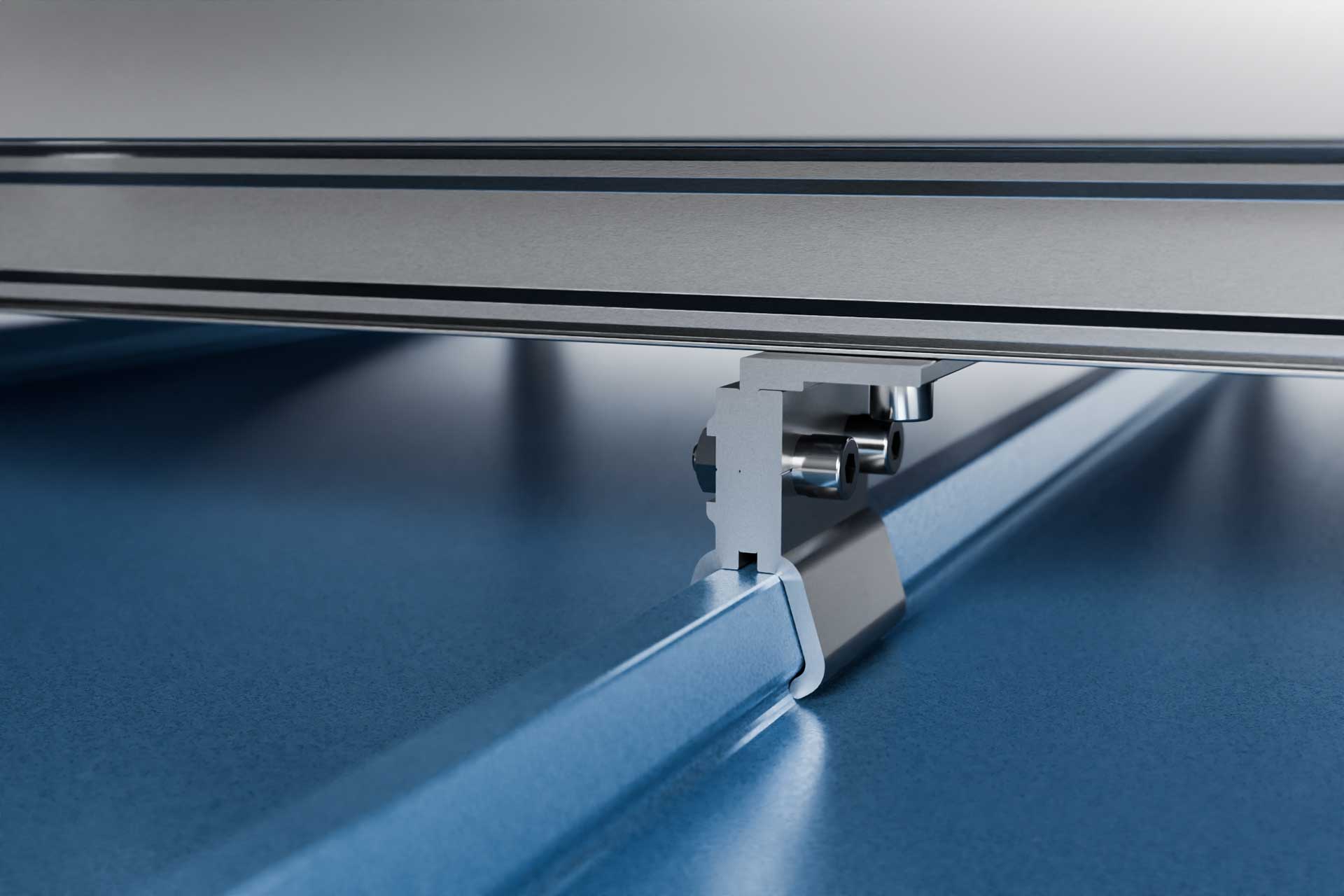
Why the Roof Profile Must Come Before the Solar Mounting System

A metal roof description is only the start of a solar mounting specification. This practical guide explains what EPCs and installers should verify before choosing a concealed-fix, pierced-fix or substructure…

Published: September 7, 2026    Written by: Wesley Palm
START READING

OPERATIONS MANAGER

The correct solar mounting approach starts with the actual roof sheet, its support arrangement and its condition. A roof described only as IBR, Klip-Lok or concealed fix is not a complete specification. Before selecting clamps, rails or fasteners, confirm the manufacturer, profile geometry, sheet thickness, support layout, roof condition, site exposure and available structural information.

That sequence matters because rooftop mounting is not simply a way to hold modules in position. It must transfer project loads into a suitable roof or supporting structure while protecting the roof’s weathering function and allowing the array to be installed, inspected and maintained. A familiar-looking roof does not automatically make a familiar bracket the correct choice.

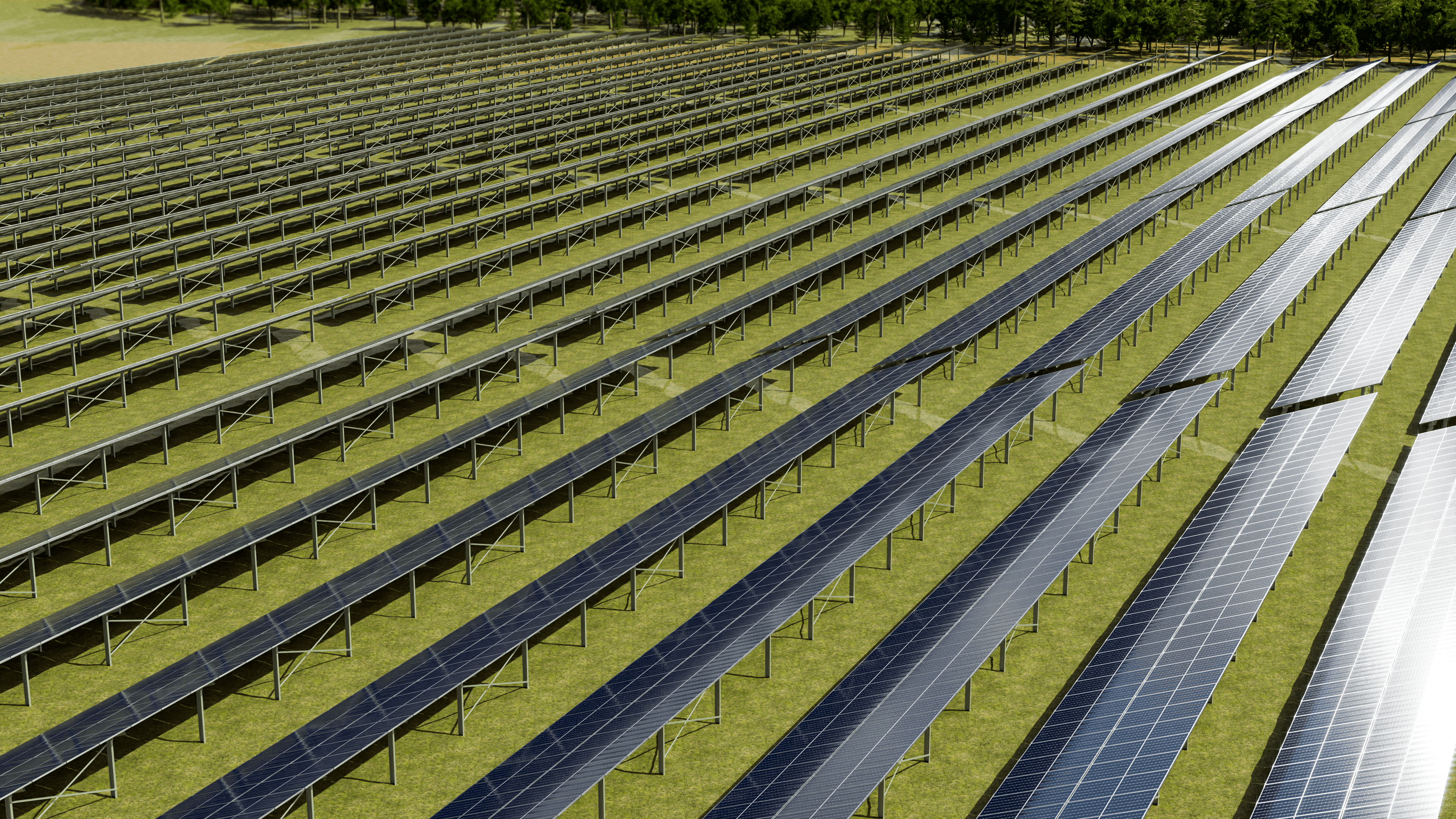
Close up image of a Lumax Energy solar installation

The roof name is only the starting point

Terms such as IBR, trapezoidal, standing seam and concealed fix describe broad roof families. Within each family, dimensions and connection details can vary. Crest width and height, seam geometry, sheet thickness, coating, clip arrangement and purlin spacing can all affect product compatibility. Two roofs that look similar in a photograph may therefore require different mounting details.

This is visible in current Lumax technical information. The LM-TBR-VL is listed for IBR 686 and similar trapezoidal roof sheeting with a 35 mm crest, but its datasheet also states that it is not applicable to every trapezoidal sheet. The LM-CLC, by comparison, is a concealed-fix clamp developed for Craft-Lock sheet. These are distinct applications, not interchangeable descriptions.

A useful rule for early design is simple: record the roof as a measured component, not a visual category. If the original roof documentation is unavailable, the project team should obtain enough verified site information to identify the profile and determine whether further assessment is needed.

Follow the load path before choosing the fixing

The project team needs to understand how loads move from the modules and mounting system into the building. Depending on the roof, that path may involve the sheet, seams, clips, roof fasteners, purlins and the primary structure. The mounting choice should be considered together with the roof’s condition, support spacing, local exposure and the applicable project design criteria.

A visual inspection can identify corrosion, loose fasteners, damaged sheets, previous repairs and areas where water is already entering. It cannot, on its own, confirm structural capacity. Where the available information is insufficient, the appropriate roofing or structural specialist should assess the roof before the final array layout and fixing specification are committed.

This is particularly important on older commercial buildings. A roof may still be performing as a weather skin while lacking the condition, support detail or remaining service life expected for a new solar installation. Finding that out after equipment reaches site is expensive. Finding it during survey and design creates options.

Choose the fixing route that suits the roof and the design

Metal-roof projects commonly use one of three connection routes. The correct route depends on the actual roof system and the engineered project solution. There is no universal ranking in which one method is always superior.

Match the mounting solution to the complete array layout

Product compatibility is necessary, but it is not the full design. Module orientation, clamp zones, rail direction, row spacing, roof edges, drainage paths, cable routes, walkways and maintenance access all influence the final layout. A component that fits the roof profile may still be unsuitable for the intended module orientation or connection spacing.

The current Lumax range illustrates this difference. The LM-TBR-VL datasheet lists both portrait and landscape orientations for its stated application, while the LM-SRL-M6-E datasheet lists landscape mounting for IBR 686 and similar 35 mm crest trapezoidal profiles. Checking the current product datasheet is therefore part of specification, not a final administrative step.

Early coordination also reduces awkward compromises on site. Space for cable management, safe movement and future roof maintenance should be considered before the array is packed as tightly as possible. Roof outlets, expansion joints, translucent sheets and existing services need deliberate treatment in the layout.

Account for the environment and material interfaces

Coastal, industrial and other aggressive environments deserve specific attention. The roof material, protective coatings, aluminium components, stainless steel fasteners and sealing materials must be considered as a system. The project specification should use the mounting supplier’s current material information and the engineer’s assessment of the site environment.

Installation workmanship is equally important. Cutting debris and metal swarf should not be left on coated roof sheets. Fasteners and clamps should be installed in the correct position and tightened to the specified requirements. Any site substitution should be checked before installation, because a similar-looking fastener or seal may not provide the same performance.

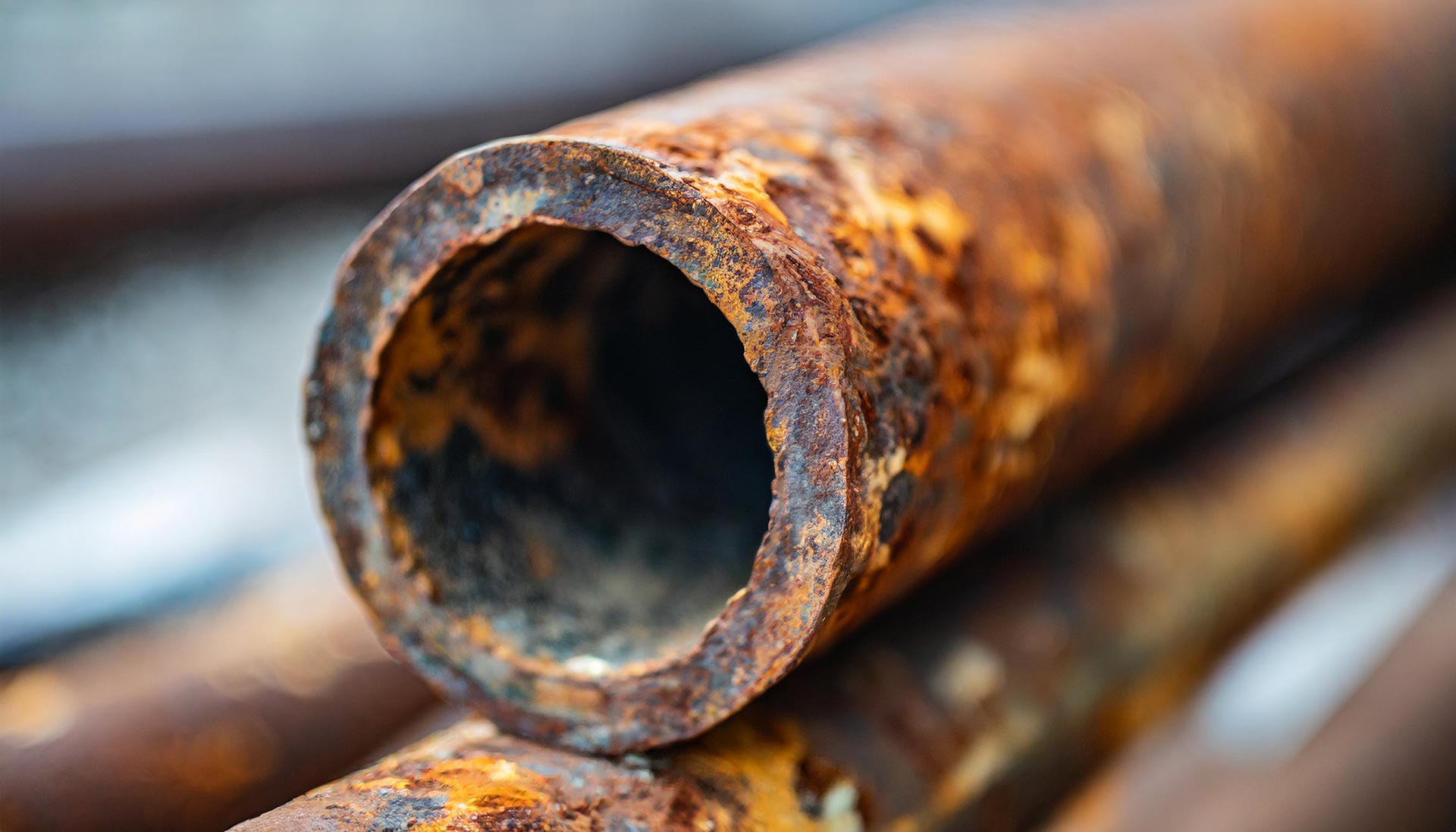
Metal effected by the weather

Build the roof information pack before requesting the final quote

A concise roof information pack helps the mounting supplier and project team make a faster, more reliable selection. At minimum, include the following:

The aim is not to create unnecessary paperwork. It is to remove assumptions before they become procurement or installation problems. A better brief allows product compatibility, design requirements and quantities to be checked against the same information.

A practical specification sequence

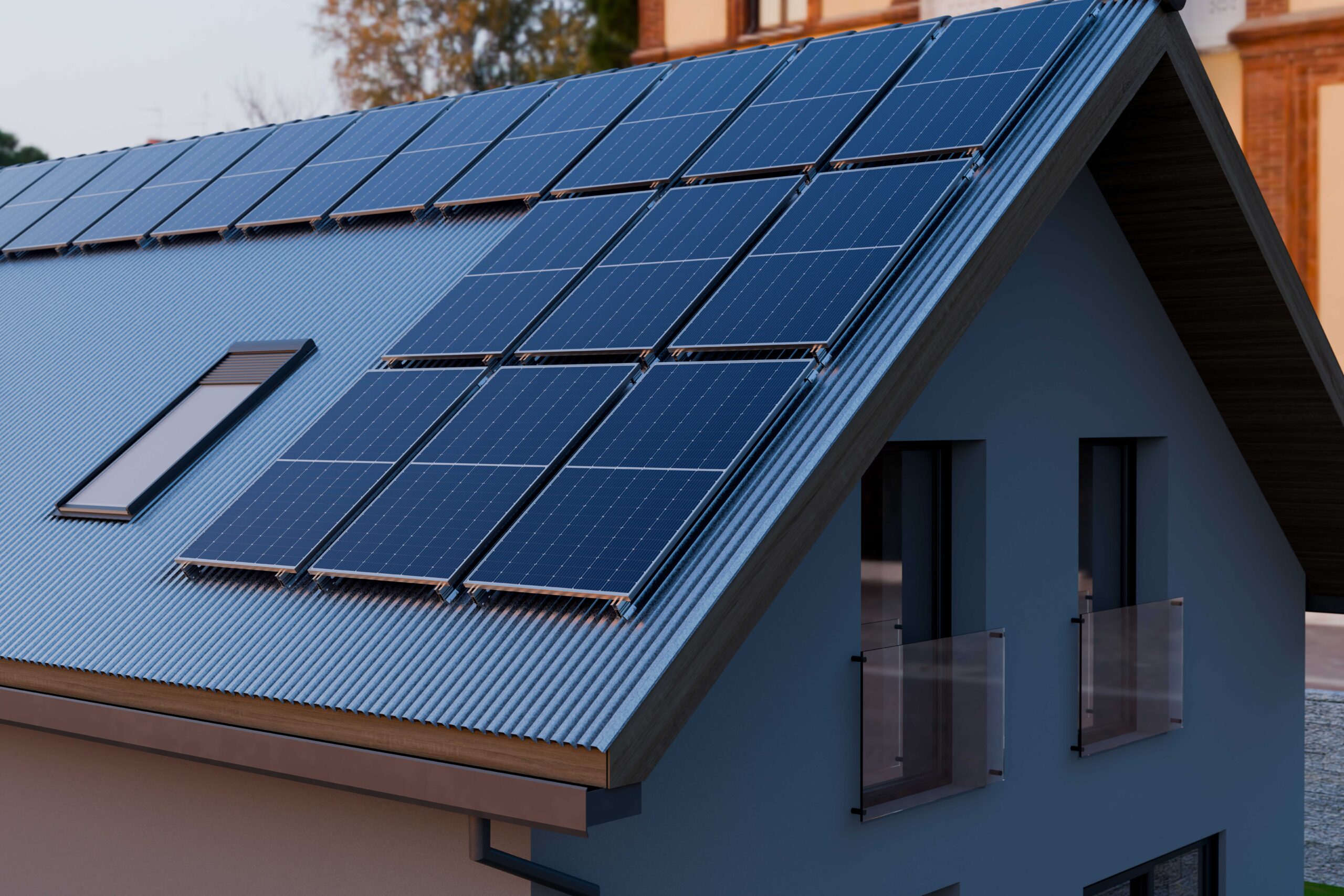
A roof top house with Lumax Energy solar mounting on the roof
Putting the roof profile first does not slow a project down. It gives the design team a sound basis for selecting the right mounting approach and helps prevent avoidable changes after procurement.

Frequently asked questions

Can any IBR bracket be used on any IBR roof?

No. IBR is a broad description, and mounting products can be limited to particular crest dimensions, sheet configurations, fasteners or module orientations. Verify the measured roof against the current product information and project design.

Is a non-penetrative clamp always the better option?

No. A non-penetrative connection can be valuable on a compatible concealed-fix roof, but the clamp, seam, roof system and project loads must work together. The correct choice is project specific.

Can the roof profile be confirmed from a photograph?

A photograph is useful for screening, but it is rarely enough for final selection. Include measurements, sheet information and the roof manufacturer’s details where available.

What should an EPC send to the mounting supplier?

Send the roof profile and dimensions, sheet thickness, support details, site information, module data, proposed layout, photographs and available drawings. Also identify roof-condition or access constraints.

When should the roof be assessed?

Assessment should happen before the final layout, mounting specification and commercial commitment are fixed. Early findings are easier to design around than late discoveries.

Planning a metal-roof solar project?

  • Share the verified roof profile, project location, module information and proposed layout with Lumax Energy.
  • Our team can help identify the appropriate product information for the next stage of design.
  • Visit lumaxenergy.com/contact-us/ or email rooftop@lumaxenergy.com.

Wesley Palm

OPERATIONS MANAGER

With over two decades of industry experience, Wesley Palm excels in sales and marketing, business development, strategic planning, and process optimisation at Lumax Energy. He is skilled at identifying new business opportunities, building strong customer relationships, and implementing effective sales processes. His analytical and strategic approach drives growth, enhances operational efficiency, and boosts customer satisfaction. Wesley values industry connections and continuous learning to stay ahead of market trends.